
Criminal Cases in the St. Charles Parish Courts
The 29th Judicial District Court has original jurisdiction over criminal, civil, and juvenile matters in St. Charles Parish. Its three general-jurisdiction divisions are C, D, and E. Local rules assign criminal matters at random, so a reader should use the division shown on the case rather than assume one judge handles a certain charge. Justice-of-the-peace matters can follow a separate path, and the district court also hears appeals from those parish courts.
The St. Charles Parish Clerk of Court is the legal custodian of the district court case file. That makes the clerk the source for filed pleadings, minute entries, dispositions, and certified copies. The sheriff’s field arrest report describes the alleged event, while the court file shows whether the district attorney instituted a charge and how the prosecution ended. Those records may share a name and date but answer different questions.
The official court page shows the three divisions, programs, forms, and current notices.
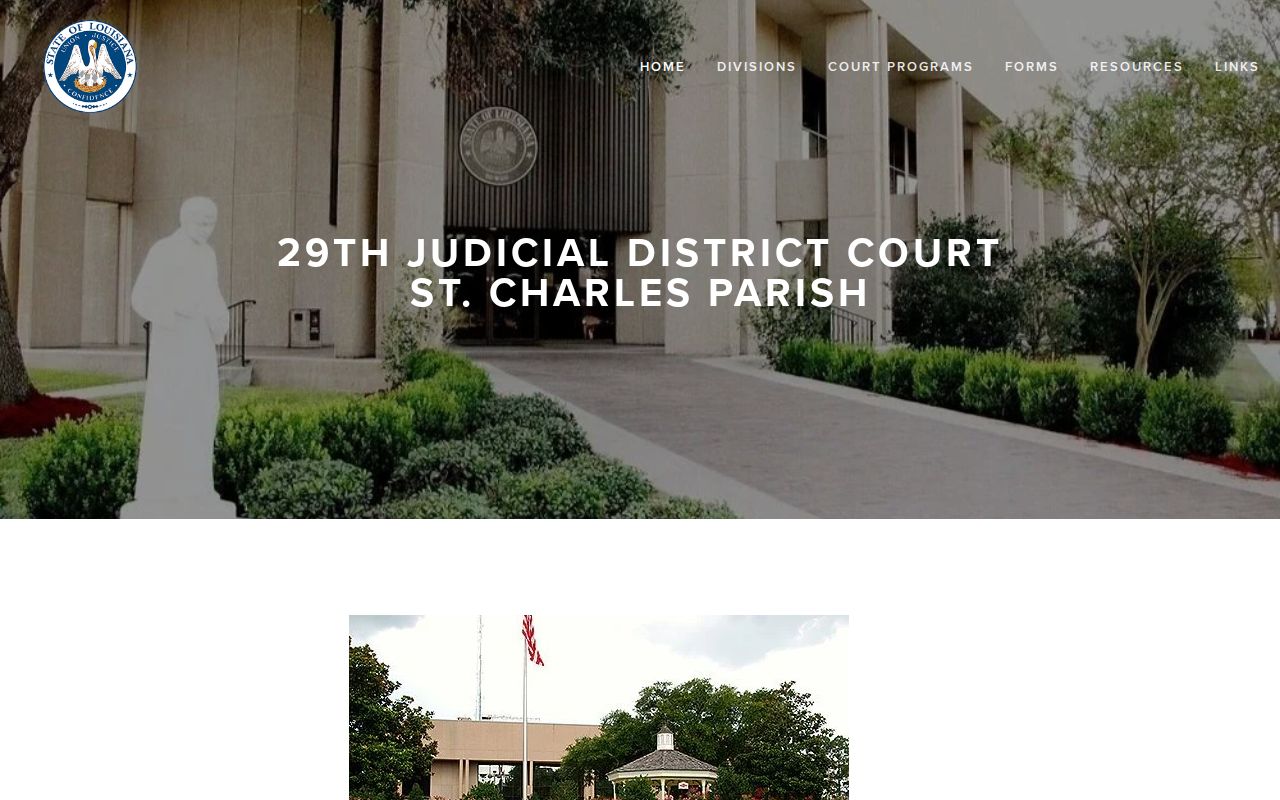
That overview helps identify the court, but the clerk’s docket remains the record source for a specific St. Charles Parish criminal case.
St. Charles Case Allotment
Division letters are not levels of crime. They identify the randomly allotted courtroom within the same general-jurisdiction court. The court lists Timothy S. Marcel Aucoin in Division C, Chief Judge Rochelle Champagne Fahrig in Division D, and Lauren D. Rogers in Division E. Judicial assignments can change, so use the current court site and the division printed in the file.
- Allotment
- The rule-based assignment of a new matter to a division.
- Minute entry
- The clerk’s concise record of what occurred at a court event.
- Disposition
- The recorded outcome of a charge, such as dismissal, acquittal, or conviction.
- Nolle prosequi
- A prosecutor’s formal decision not to continue a charge.
Note: A division letter identifies where the St. Charles Parish case is handled; it does not state the charge level or result.
How to Search Case Records
Start with the name, approximate filing period, and any case or arrest item number already known. Louisiana has no single free statewide criminal-case database. The Louisiana Clerks’ Remote Access Authority, or LCRAA, coordinates parish remote systems, while state law requires public electronic access to covered criminal minute entries or summaries filed on or after January 1, 2020. Availability of documents and older St. Charles Parish criminal court cases can differ from the required minute layer.
- Open the LCRAA portal or the local Clerk site and choose the available St. Charles Parish access route.
- Search with the case number when known. Otherwise, use the defendant name and narrow by the filing period.
- Match the caption, division, dates, and charges. Do not rely on a name alone.
- Read each minute through the disposition and sentence. A filing entry is not a final result.
- Call or visit the Clerk for older records, absent entries, complete documents, or a certified copy.
Automated research could not verify a stable field-by-field local search form, so exact controls should be checked in the live service. The confirmed access choices are summarized below.
| Search route | Best identifier | Use | Fallback |
|---|---|---|---|
| LCRAA remote layer | Case number or party name | Available remote minutes and records | Clerk counter |
| Local Clerk site | Case and division | Local entry point | Call 985-783-6632 |
| Clerk counter | Case number, name, filing period | Complete, older, or certified record | Written inquiry |
St. Charles Remote Court Minutes
LCRAA provides Louisiana’s clerk remote-access gateway, not a universal free criminal search with identical data in every parish.
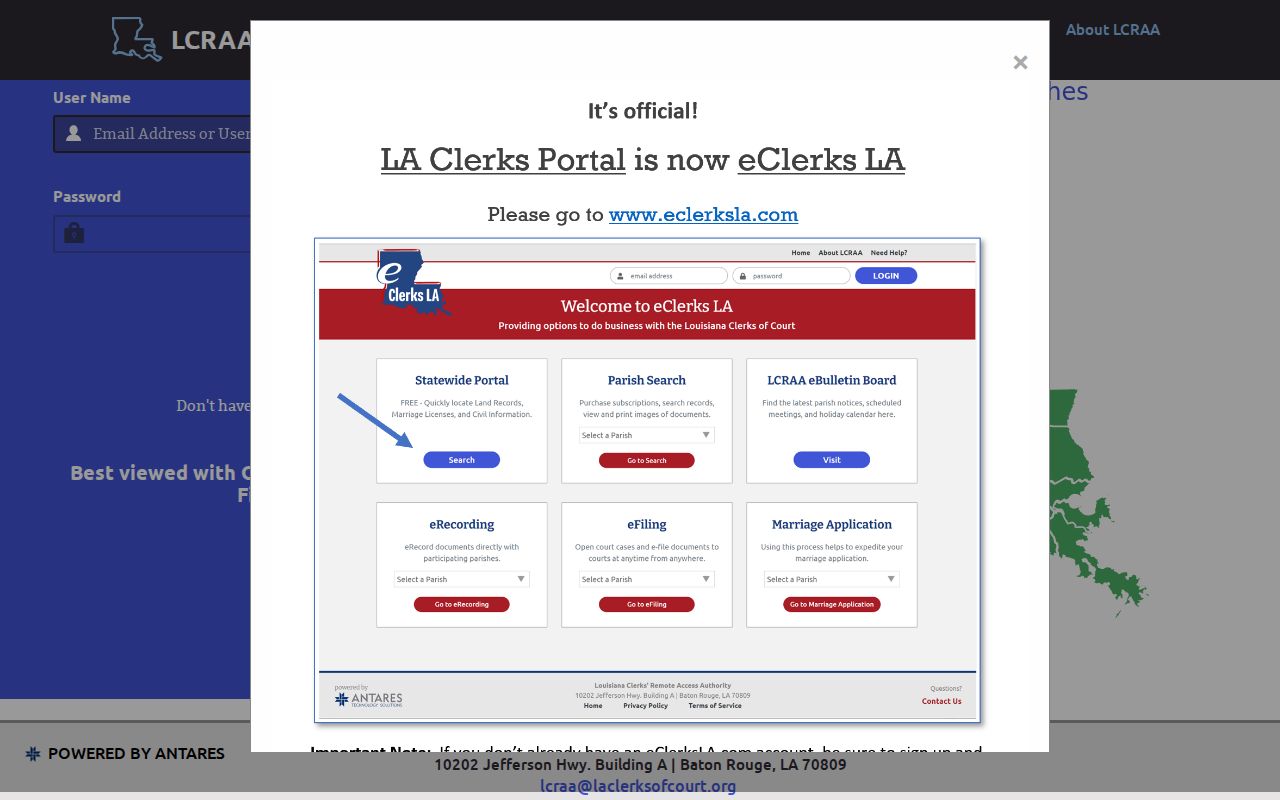
The remote layer is most useful for locating a St. Charles Parish minute trail before asking the Clerk for the underlying pleading or certified disposition.
Louisiana R.S. 13:753 sets the public electronic minute-entry baseline for covered cases filed from 2020 forward. A remote summary may still omit document images, old material, sealed content, or details that appear only in the maintained file. When a page fails to load, do not route the request through the parish government’s JustFOIA portal. The parish expressly sends court requests to the Clerk.
What the Case File Shows
A St. Charles Parish criminal case file is organized around the prosecution. The research supports a requested-field checklist rather than a claim that each field appears in every online entry. Verify the inventory with the Clerk, especially when a certified outcome is needed.
| Case number and division | Identifies the local prosecution and assigned 29th JDC division. |
|---|---|
| Charging instrument | Shows a bill of information, indictment, and the filed or amended charge. |
| Minute entries | Record arraignment, hearings, motions, pleas, trial events, and rulings. |
| Counsel and judge | Identify attorneys and the judicial officer tied to the proceeding. |
| Disposition | Shows dismissal, nolle prosequi, acquittal, plea, or verdict when recorded. |
| Sentence and obligations | May list custody, probation, financial obligations, and later revocation events. |
A state rap sheet can carry a judicial segment, but it does not replace the pleadings, minutes, and evidence-related filings in the Clerk’s record. If the state cycle lacks an outcome, obtain the certified, unaltered disposition for each booking charge. LSP needs close identity and arrest-date matches, plus amendments, verdict, and sentence details, to correct the repository.
St. Charles Clerk Fallbacks
The St. Charles Parish Clerk of Court website is the local records entry point.
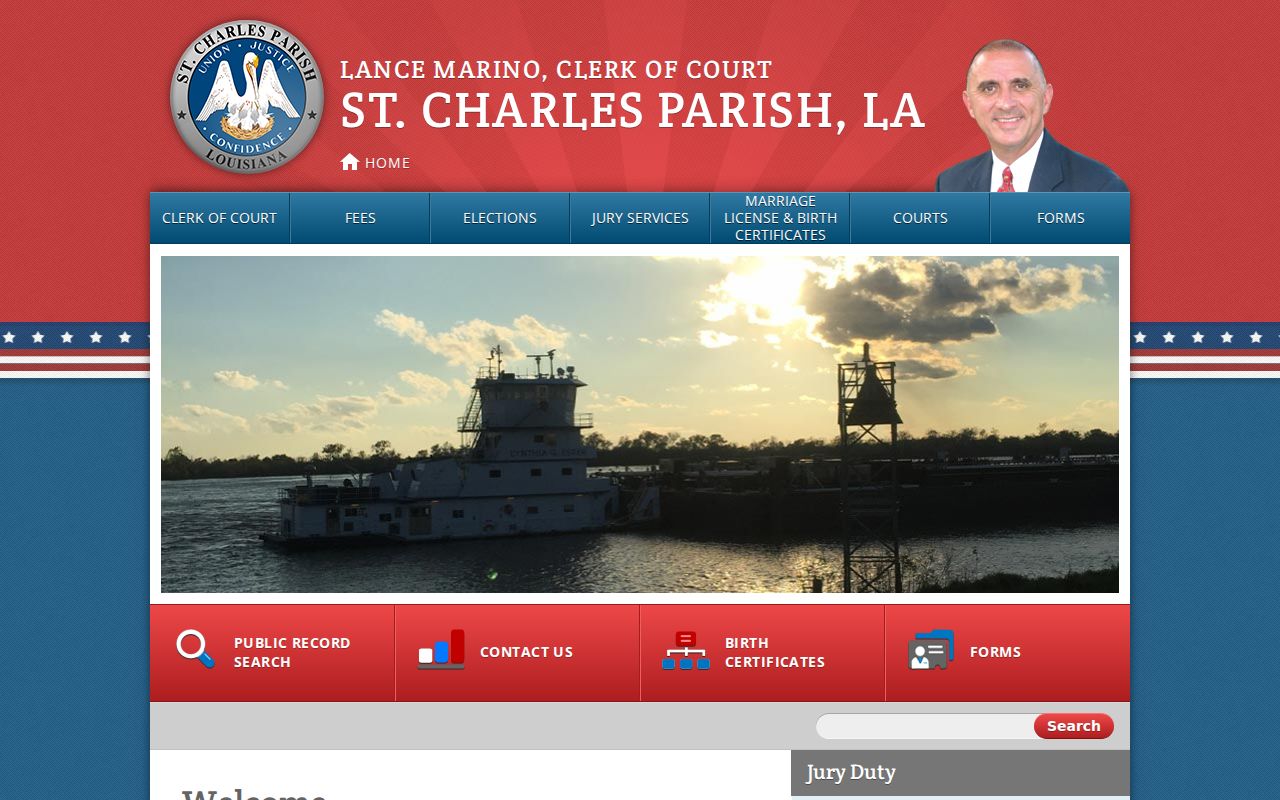
If the website blocks access or lacks a final minute, contact the custodian rather than assuming the St. Charles Parish criminal record is clear.
St. Charles Parish Clerk
15045 River Road
Hahnville, LA 70057
985-783-6632
Ask about complete files, older cases, plain copies, and certified dispositions. The research did not verify current copy or certification fees, so confirm the total before ordering.
The courthouse public entrance is open weekdays during parish business hours. Visitors pass through security. Phones, smart watches, and other electronic devices are prohibited in all three courtrooms except for court staff and appearing attorneys. Security also bans weapons and edged tools and does not store them. These rules matter when a records visit coincides with a hearing.
Stages of a Criminal Case
An arrest can start the local sequence, but the filed case begins when the district attorney institutes charges. A bill of information is a prosecutor-filed charge; an indictment comes from a grand jury. At arraignment, the accused answers the filed charge. Discovery and motions address evidence and legal issues. A plea or trial then leads to judgment and, if there is a conviction, sentencing.
Case flow: Charges Filed › Arraignment › Pretrial › Plea or Trial › Disposition › Sentencing
Appeal, post-conviction litigation, probation, and revocation can add later entries. A revocation filing alleges a violation; it is not a final ruling until the court acts. Compare the sequence with the separate St. Charles Parish arrest history, then read the court record through its most recent event.
St. Charles Recovery Court
The 29th JDC’s Recovery Court began about 24 years ago under the Drug Court name. It is a structured court program for eligible probationers, not a separate records custodian. The program can include assessment, inpatient or intensive outpatient care, application and continuing-care phases, and drug testing. Its name may appear in a case record beside probation terms or later compliance events.
FINS, or Families in Need of Services, provides a different juvenile diversion path. Juvenile files stay subject to stronger access limits. A public adult docket rule does not convert protected juvenile records into an open search product. Readers should ask the Clerk which portion, if any, is public rather than infer details from a missing online entry.
Missing St. Charles Case Outcomes
A blank disposition can reflect timing, a remote-view gap, an unmatched state cycle, or a genuinely incomplete report. First, compare the case number, arrest date, original booking charges, and amendments. Then ask the Clerk for the final disposition for every charge. A single booking may contain several counts, and correcting only one can leave the state history incomplete.
For review of one’s own Louisiana repository record, use the Louisiana State Police Right to Review process. Fingerprints help distinguish people with similar names. If the repository is wrong, preserve the response and submit the certified disposition under LSP correction instructions. The court file proves the St. Charles Parish judicial outcome; LSP controls the state repository copy.
Note: Dismissal or acquittal ends a charge but does not by itself erase the separate sheriff arrest and booking records.
Access & Restrictions
The Louisiana Public Records Law presumes access but preserves specific exceptions. Court records may exclude sealed matters, juvenile material, protected victim identities, social security numbers, and other confidential data. Online redaction can be broader than what a custodian may provide after a proper request, yet the absence of a name or document is not permission to infer protected facts.
Expungement makes the specified record confidential under Article 973, subject to continuing access for law enforcement, prosecutors, criminal-justice agencies, the subject and counsel, and other listed recipients. It does not mean every system physically deletes all traces. For a St. Charles Parish criminal court case that no longer appears online, the Clerk can explain whether the issue is age, indexing, restriction, or an order without disclosing protected content.
Access pointer: Use the Clerk for court files, SCSO for sheriff reports, LSP for a subject’s repository review, and PACER for federal cases in the Eastern District of Louisiana.