
How to Check Criminal History in St. Charles Parish
Start with the question, not a person's name. Current custody belongs in the official Nelson Coleman roster. A recent arrest narrative belongs in the Sheriff's Archive Center. Filed charges and final outcomes belong with the St. Charles Parish Clerk of Court and the 29th Judicial District Court. A person reviewing a statewide fingerprint-linked record should use Louisiana State Police Right to Review. Each route answers a distinct question, and none replaces the others.
- Choose custody, arrest, court, local report, state repository, corrections, or federal records.
- Gather a full name, spelling variants, date of birth, item number, or case number when available.
- Search the matching official channel and note the record date and agency.
- Compare the arrest or booking entry with the clerk's filed charge and disposition.
- Request a certified disposition or use Right to Review when an official self-review or correction is needed.
A missing result proves little. A person may have been released, transferred, booked elsewhere, or indexed under different data. A case can also continue after release. Verify identity and read the disposition before reaching a conclusion.
St. Charles Criminal Records Split Three Ways
The parish's criminal record trail forms in stages. An arresting agency writes the incident and field arrest report. Nelson Coleman Correctional Center creates a separate custody record when a person is booked locally. The district attorney then decides whether to institute a charge, and the Clerk of Court preserves the 29th JDC file, minutes, pleadings, outcome, and sentence. Fingerprint-supported arrest cycles and later reported dispositions can reach the state repository.
Record flow: Incident or arrest › Nelson Coleman booking › District Attorney charging decision › 29th JDC case › LBCII disposition update.
Delays, unmatched identifiers, and non-fingerprint events can leave gaps. That is why an SCSO report, jail entry, court case, and LBCII rap sheet should be read as linked records, not copies of one file.
A sound comparison starts with dates and stable numbers. Match the sheriff's item number to the arrest event, the booking date to custody, and the clerk's case number to the judicial record. Then compare the charge at each stage. Police may list one count at arrest while the prosecutor files another or declines prosecution. The court disposition controls what happened in the filed case. If LBCII lacks that outcome after the court file is complete, the subject can use a certified disposition in the state correction process.
Official Louisiana Background Checks
The Louisiana Department of Public Safety and Corrections, Office of State Police, Bureau of Criminal Identification and Information maintains the state repository. The Internet Background Check portal is account and authorization based. It is not an unrestricted public name search. For a person reviewing their own Louisiana record, LSP Right to Review is the direct route. Fingerprints distinguish people with similar names and support a later challenge to an incomplete or wrong cycle.
The official LSP background-check page illustrates the distinct authorized-check and self-review channels.
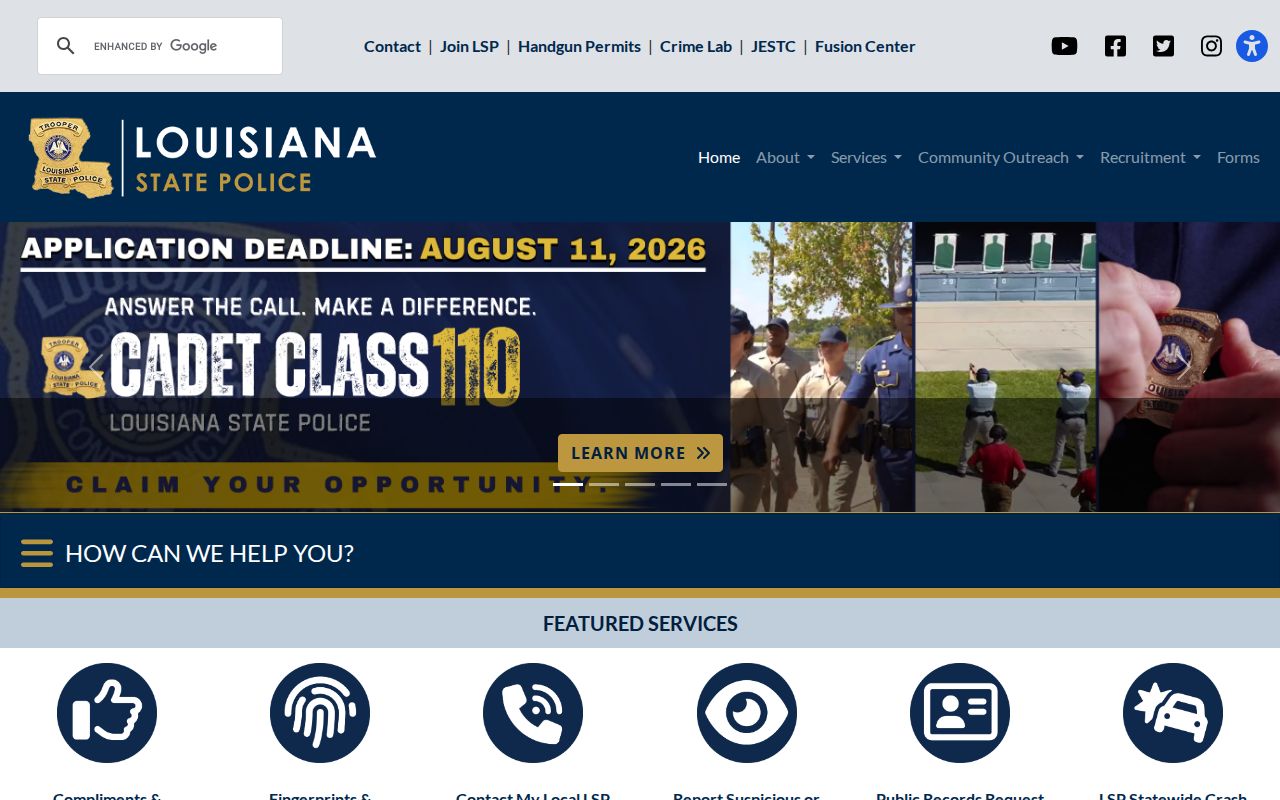
Use the instructions for the exact transaction because a local fingerprint capture does not by itself determine which record product will result.
| Channel | Best Answer | Published Cost or Status |
|---|---|---|
| LSP Right to Review | Your own Louisiana repository record | Mail form states $31; LSP fingerprinting adds $10, and a $5 technology fee may apply |
| LSP IBCC | Statutorily authorized electronic check | Account and transaction pricing |
| FBI Identity History Summary | Your own FBI-maintained record | $18 direct FBI fee, separate capture costs possible |
| Clerk and 29th JDC | Local filed case and disposition | Confirm current copy and certification cost |
St. Charles Criminal Records Under One Roof
The St. Charles Parish Courthouse at 15045 River Road in Hahnville is the main local records building. The Clerk of Court, 29th JDC, District Attorney, Sheriff's Criminal Records Division, court security, and parish government work there. That concentration is useful, but custody still matters. The Clerk holds criminal court files. The Sheriff's third-floor counter handles initial SCSO incident and crash reports. The District Attorney's file is not a substitute for the official court record.
Criminal Records Division
15045 River Road, third floor
Hahnville, LA 70057
985-783-6237
Weekdays, 8:00 a.m. to 4:30 p.m.
Public Records and Legal Affairs
260 Judge Edward Dufresne Parkway
Luling, LA 70070
985-783-6237
Monday through Friday, 8:00 a.m. to 4:30 p.m.
Nelson Coleman Corrections
5061 Highway 3127
Killona, LA 70057
985-783-1164
Staffed around the clock
Visitors enter through security screening. Phones, smart watches, and other electronic devices are barred from all three courtrooms except for court staff and appearing attorneys.
The parishwide structure also prevents a common routing error. St. Charles Parish has no incorporated municipalities, city police records units, or municipal courts. Luling, Destrehan, and other familiar community names are Census-designated places. SCSO provides parishwide patrol through east-bank and west-bank supervision. Criminal filings still move to the 29th JDC, while district justice-of-the-peace courts handle matters within their own authority. Searching for a nonexistent city police desk wastes time and separates a request from the custodian that holds it.
Types of St. Charles Parish Criminal Records
The label “criminal record” hides several documents. An incident report describes an alleged event. A field arrest report records the legal process and asserted basis for an arrest. A booking file establishes custody and listed charges. The clerk's case file shows what prosecutors filed and how the court ruled. The state repository links fingerprint-supported arrest cycles to outcomes that agencies report.
- Arrest and booking records come from SCSO and Nelson Coleman intake.
- Criminal court case files belong to the Clerk of Court.
- Warrants and attachments generated by the 29th JDC are maintained by SCSO Criminal Records.
- Corrections records cover state custody, sentence, release, and supervision.
- Registry profiles serve statutory notice and are not full rap sheets.
The SCSO incident-report policy distinguishes the public initial report from restricted supplemental and investigative material.
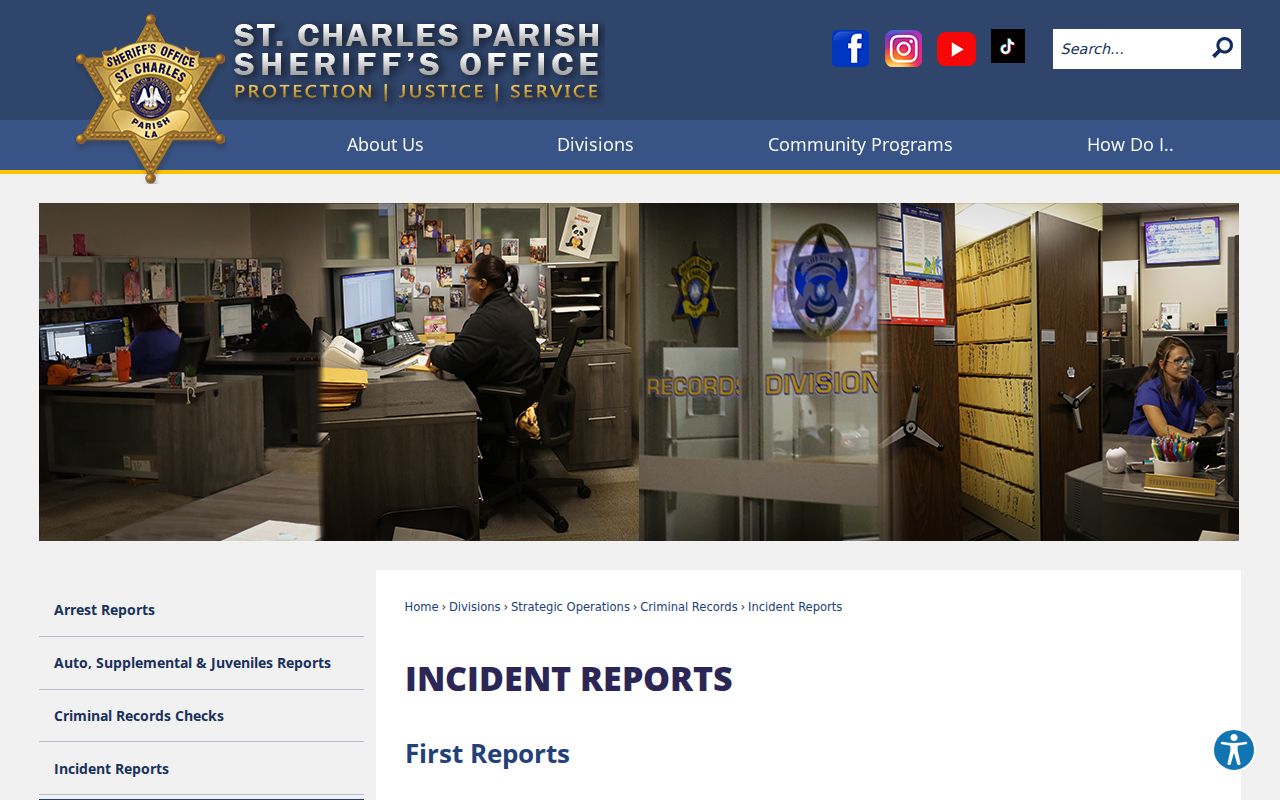
That distinction prevents a request for one public document from being mistaken for access to the full investigation.
Requesting St. Charles Parish Sheriff Records
SCSO accepts formal public-record requests in person or by mail. Its policy says other transmission methods are not deemed received. A written request should identify the report with an item number when known, plus the date, location, and record type. Mail goes to Captain Maurice Bostick, St. Charles Parish Sheriff's Office, P.O. Box 426, Hahnville, LA 70057. In-person delivery goes to Captain Bostick or Administrative Assistant Rhonda Walker at the Luling headquarters.
The official request rules and fee schedule show the two accepted delivery routes.
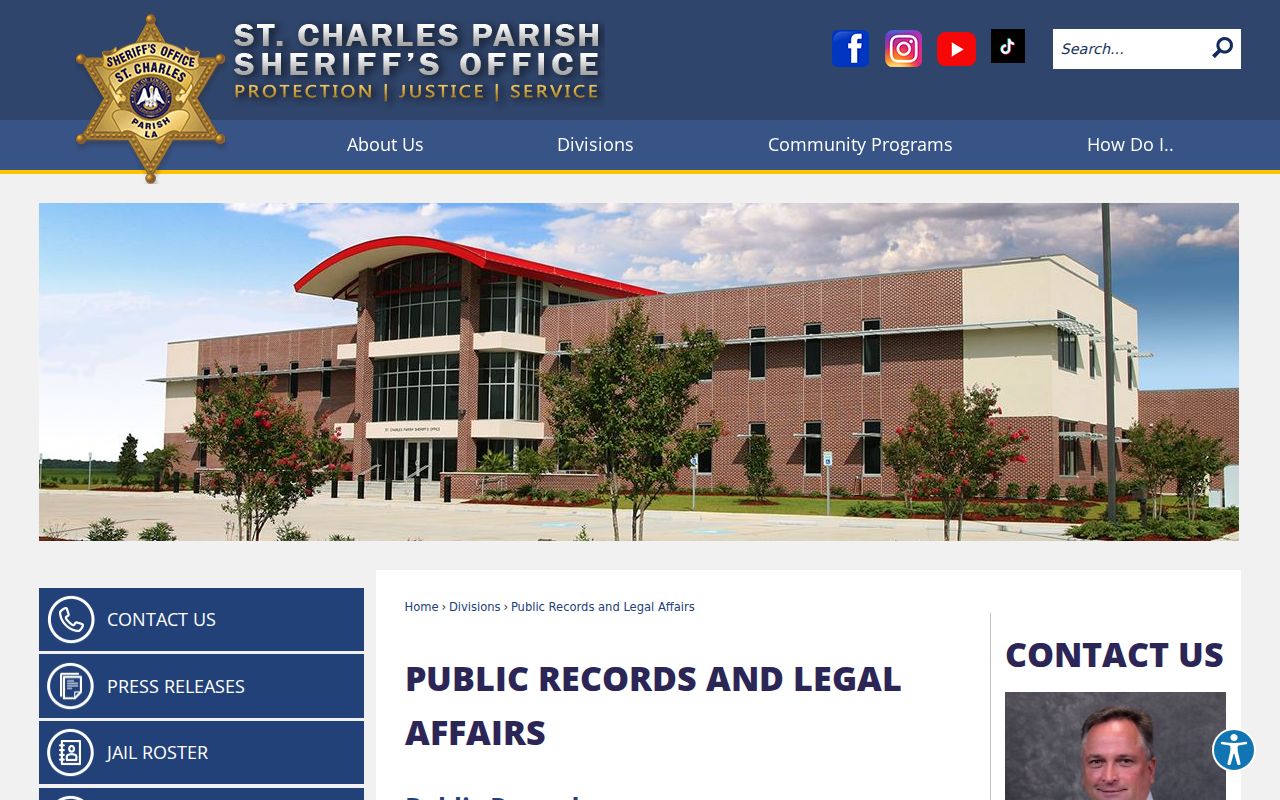
The parish JustFOIA portal does not replace this process. Parish government redirects arrest, accident, and body-camera requests to SCSO and court records to the Clerk.
| Record Product | Published Charge |
|---|---|
| Paper document | $1 per page |
| Audio or video | $1 per minute plus $10 computer disk |
| Photographs | $10 |
| Certified-mail postage | Actual cost |
What a St. Charles Parish Criminal Record Shows
A Louisiana repository record groups identity data and event cycles. It may list a name used at arrest, aliases, birth date, state identification number, FBI number, arrest date, agency, tracking number, charges, and statute codes. A judicial segment may add the case number, filed or amended charge, outcome date, sentence, probation, or custody. It usually does not contain the police narrative, witness statements, evidence, court pleadings, or a live jail location.
| Name and Identifiers | Names used, aliases, birth data, and fingerprint-linked numbers. |
|---|---|
| Arrest and Booking | Agency, date, tracking details, custody event, and listed charges. |
| Charges and Statutes | Arrest charges plus later filed or amended counts when reported. |
| Disposition | Plea, verdict, dismissal, nolle prosequi, acquittal, or another outcome. |
| Sentence | Custody, probation, and other reported terms. |
| Custody or Supervision | Repository entries may lag behind live parish or DPS&C status. |
When an outcome is missing, obtain a certified, unaltered disposition from the Clerk or District Attorney, then follow LSP's correction process for the affected arrest cycle.
One arrest cycle may contain several charges. Correction papers should match the subject's name and birth date, the arrest date within one day, each original charge, all amendments or reductions, the result for every count, and the sentence type and length. Correcting only one count can leave the cycle incomplete. Keep certified papers intact and follow current LSP instructions rather than marking or editing the clerk's document.
St. Charles Custody Records Have Boundaries
The official Zuercher roster covers current Nelson Coleman custody. It does not cover every person once held there, and it does not replace the Louisiana corrections locator. For a person serving a state sentence, use the DPS&C Imprisoned Person Locator. VINELink adds custody-change notifications. Call Nelson Coleman at 985-783-1164 when the live application fails or a recent transfer creates doubt.
The state locator instructions identify the sentenced-person channel.
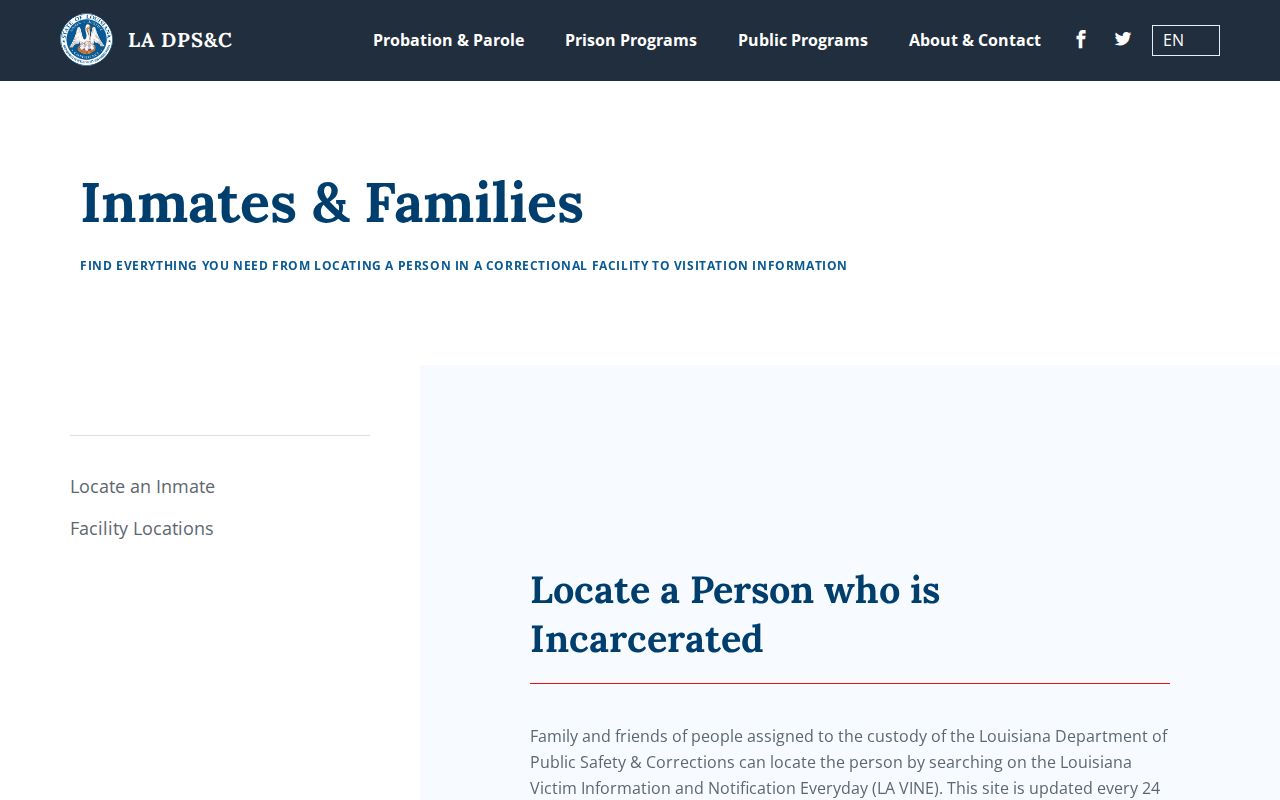
That state layer begins where the parish pretrial roster often ends.
The VINELink custody notification interface is a separate tool for status updates.
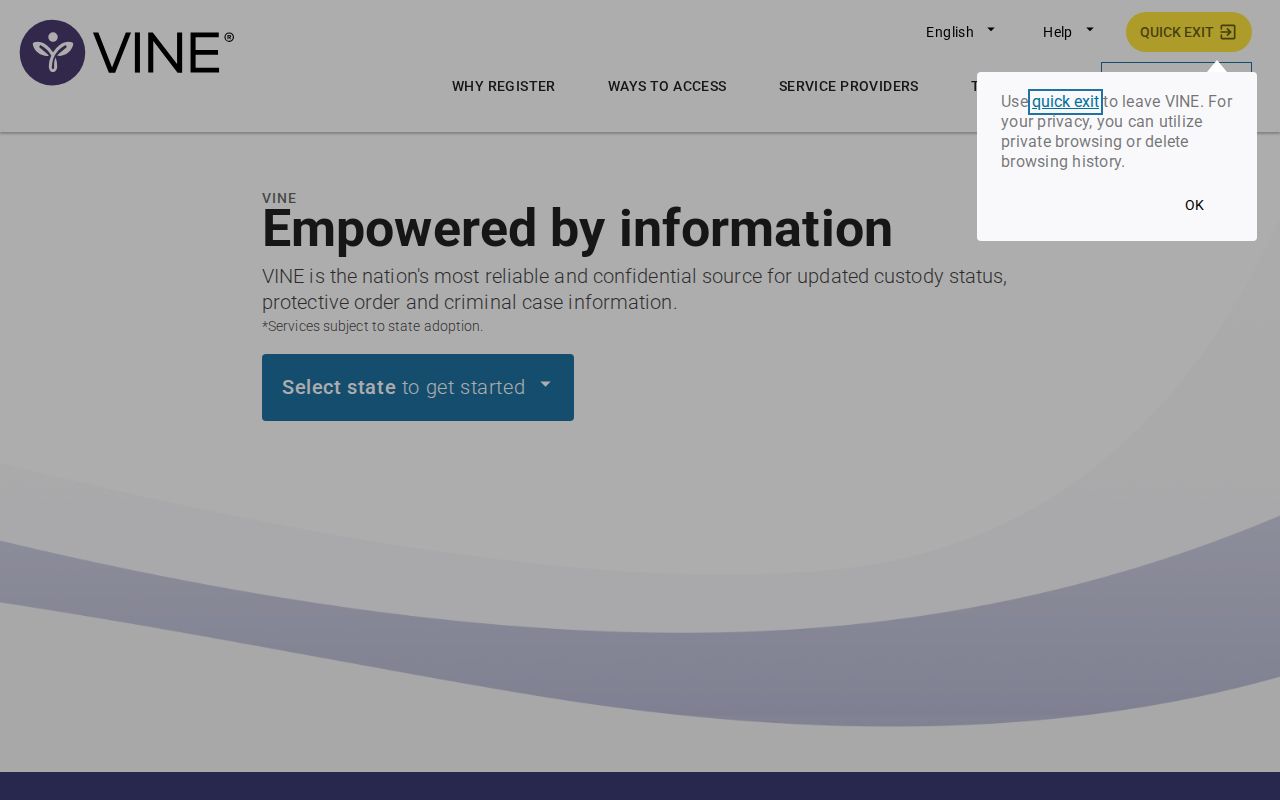
Neither tool establishes guilt, acquittal, or the full outcome of a 29th JDC case.
Public Access Laws for St. Charles Parish Criminal Records
Louisiana Public Records Law begins with broad access but preserves major criminal-justice exceptions. A custodian must justify withholding, yet pending criminal litigation, confidential sources, investigative methods, security procedures, and protected victim or juvenile identities can remain closed. Public access to a sheriff report also does not open the full LBCII rap sheet because repository dissemination follows a different statute.
Key Louisiana laws:
R.S. 44:1 defines public records, including retained electronic material.
R.S. 44:31 creates inspection and copying rights subject to exceptions.
R.S. 13:753 requires access to covered criminal minute entries or summaries filed from 2020 forward.
C.Cr.P. Art. 973 makes an expunged record confidential while preserving listed official access.
Absence from a public result may reflect a restriction, age of the record, or incomplete reporting. It should not be filled with assumptions.
St. Charles Warrant Records Need Direct Checks
St. Charles Parish has no verified public online warrant list. The SCSO Warrant Section processes warrants and attachments and works with other agencies, but its public page is not a name-search database. A person resolving their own possible warrant should contact SCSO, verify the issuing court through the Clerk, and seek legal advice before appearing. Justice-of-the-peace attachments may require confirmation with the issuing tribunal.
The official Warrant Section page explains the unit and its role.
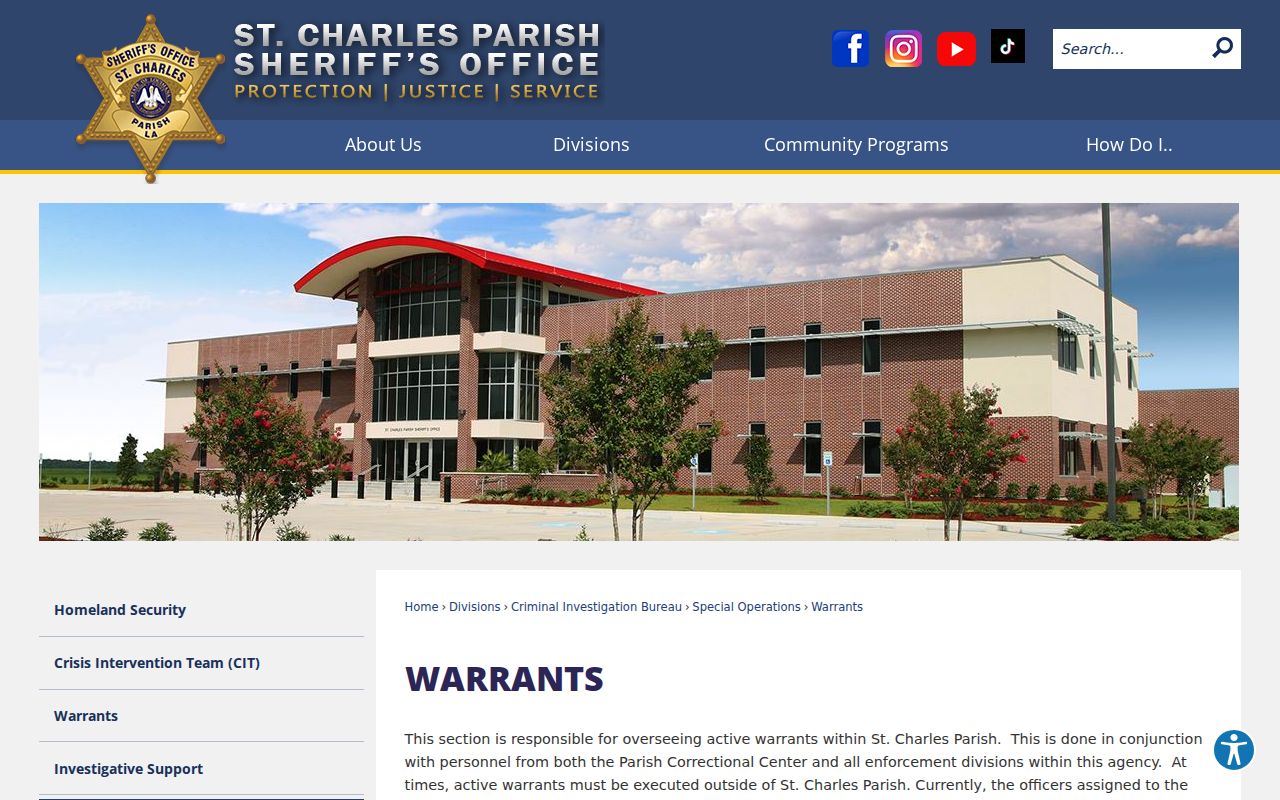
Do not treat an unverified caller, text, or social post as proof of a warrant. The 29th JDC posts scam warnings about calls that demand money for claimed arrest, bail, or bond issues.
Sealed, Expunged, and Restricted Records
Louisiana expungement makes the specified arrest or conviction record confidential. It does not physically erase every trace. Article 973 preserves access for law enforcement, prosecutors, the record subject and counsel, and other recipients named by law. Juvenile records follow separate procedures. Victim identities, active investigative files, confidential-source material, and sealed warrants can be unavailable for reasons apart from expungement.
An adult should identify each arrest and court case, obtain the disposition, determine eligibility under Articles 976 through 978, file the uniform papers in the court of prosecution, serve required agencies, and verify implementation after an order. The ordinary combined charge is capped at $550 under Article 983, though exemptions and case facts can alter what is due. Confirm the total with the Clerk before filing.
Article 985.2 describes an automated process, but the law makes operation contingent on an appropriation. Manual filing remains the dependable documented route unless LSP and the Clerk confirm otherwise.
St. Charles Criminal Records on the Sheriff App
The free St. Charles Parish Sheriff's Office mobile app adds another official information channel. SCSO advertises arrest news, reported crimes, crime mapping, alerts, anonymous tips, accident-report links, and service links. Official material does not establish an app-only warrant or inmate search, so use the direct warrant and jail channels for those questions.
The Sheriff's mobile app page lists its public-safety and report features.
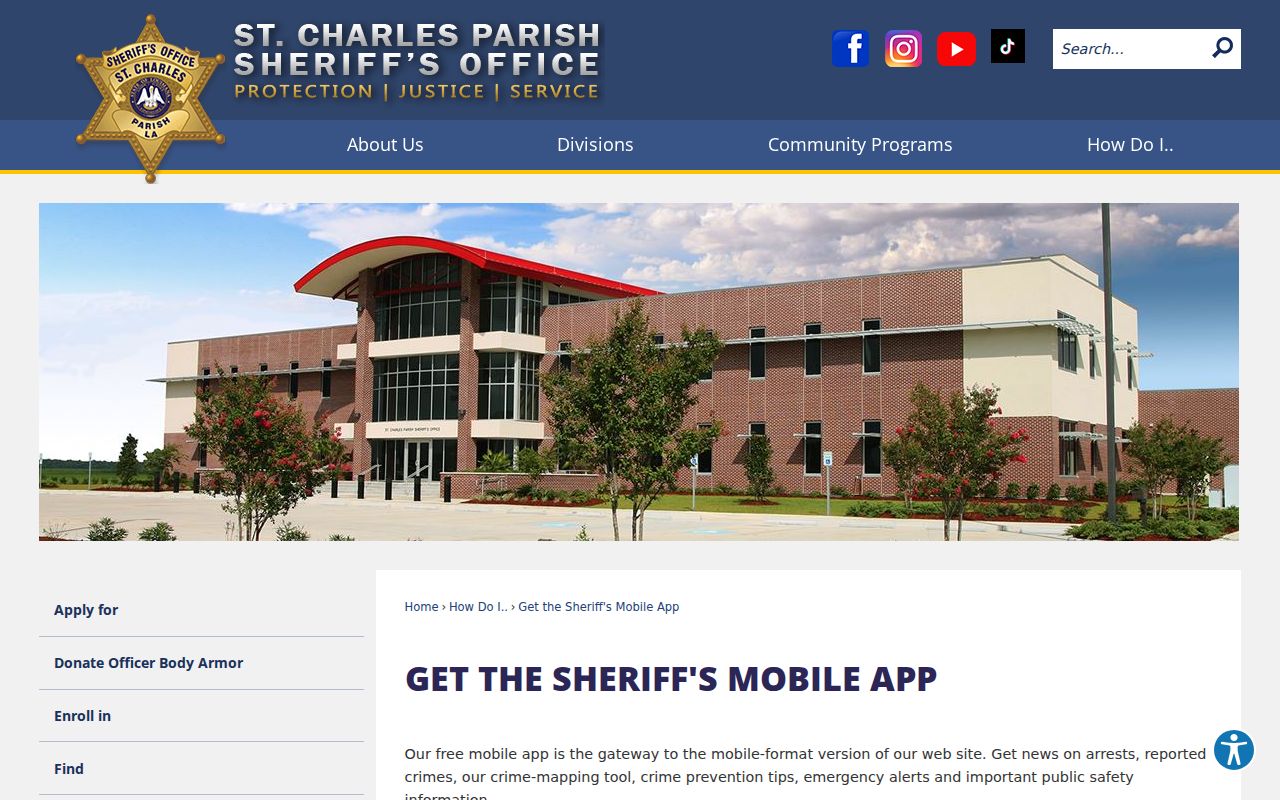
App alerts can point to a new event, but the underlying report, booking file, or court disposition still belongs with its official custodian. Save the event date and item number when shown, then use those details in a direct request.
St. Charles Charges After an Arrest
An arrest charge is not always the charge filed in court. The St. Charles Parish District Attorney decides whether and what to institute. The Clerk then records the bill of information or indictment, minutes, hearings, plea or trial result, and sentence. A dismissal, nolle prosequi, or acquittal is not a conviction, although the earlier arrest trail may remain until expunged.
The District Attorney's official site identifies the office, its programs, and contact routes.
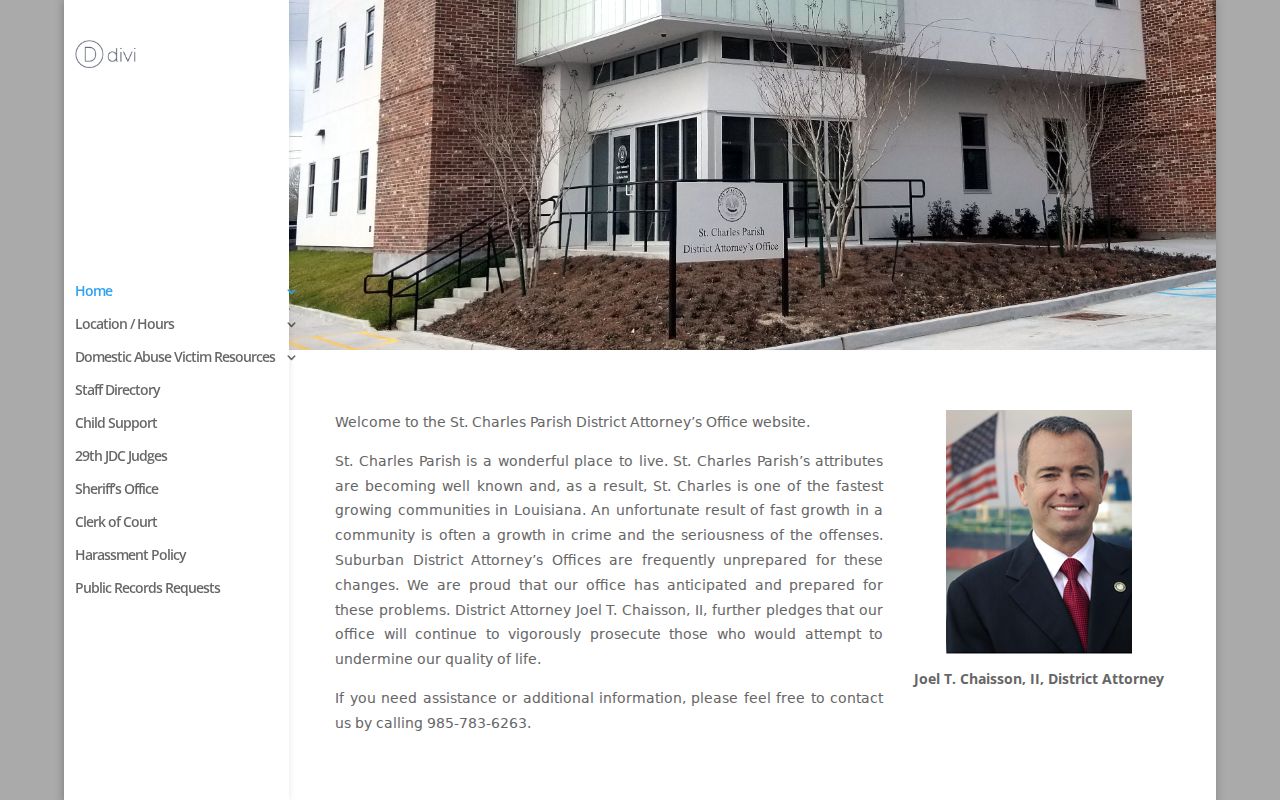
The DA also operates diversion-related programs, while the 29th JDC runs Recovery Court. Program participation and later relief should be confirmed in the court file rather than inferred from an arrest brief.
St. Charles Dispatch Records Are Changing
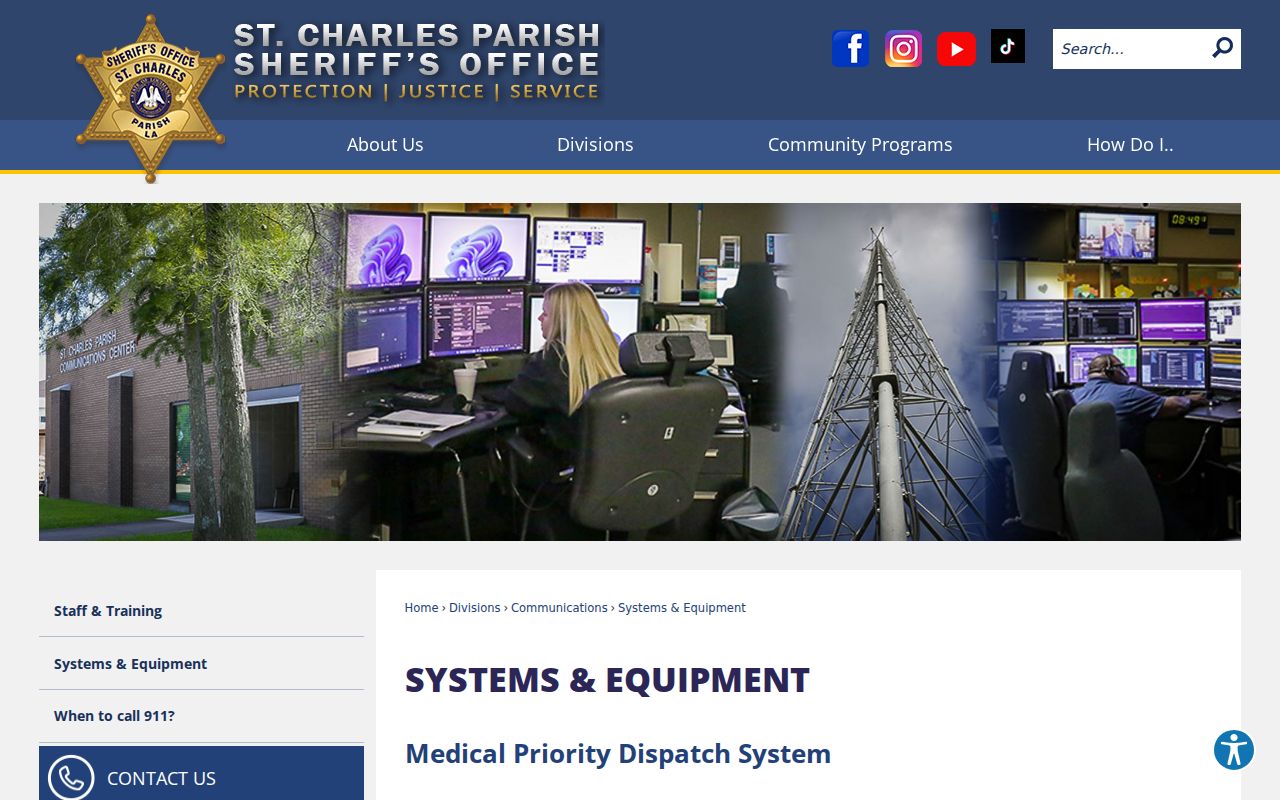
SCSO documented communications upgrades toward redundant 700 MHz dispatch consoles and added Text-to-911 and next-generation complaint handling. Those systems can create time-stamped dispatch and message records that differ from the deputy's later incident narrative. Public access still depends on the Louisiana Public Records Law, pending-investigation limits, privacy redactions, and the specific record requested.
The Sheriff's systems and equipment description outlines the modernization.
A precise request should distinguish a dispatch log, 911 audio, text message, body-camera file, and incident report. They are separate records with different formats and possible restrictions.